
He Trusted in the Lord God of Israel
2 Kings 16-25 · July 13–19, 2026
Hezekiah and Josiah show how faith, scripture, and covenant commitment can lead a people back to the Lord.
Monday, July 13
Trust When Faith Is Challenged
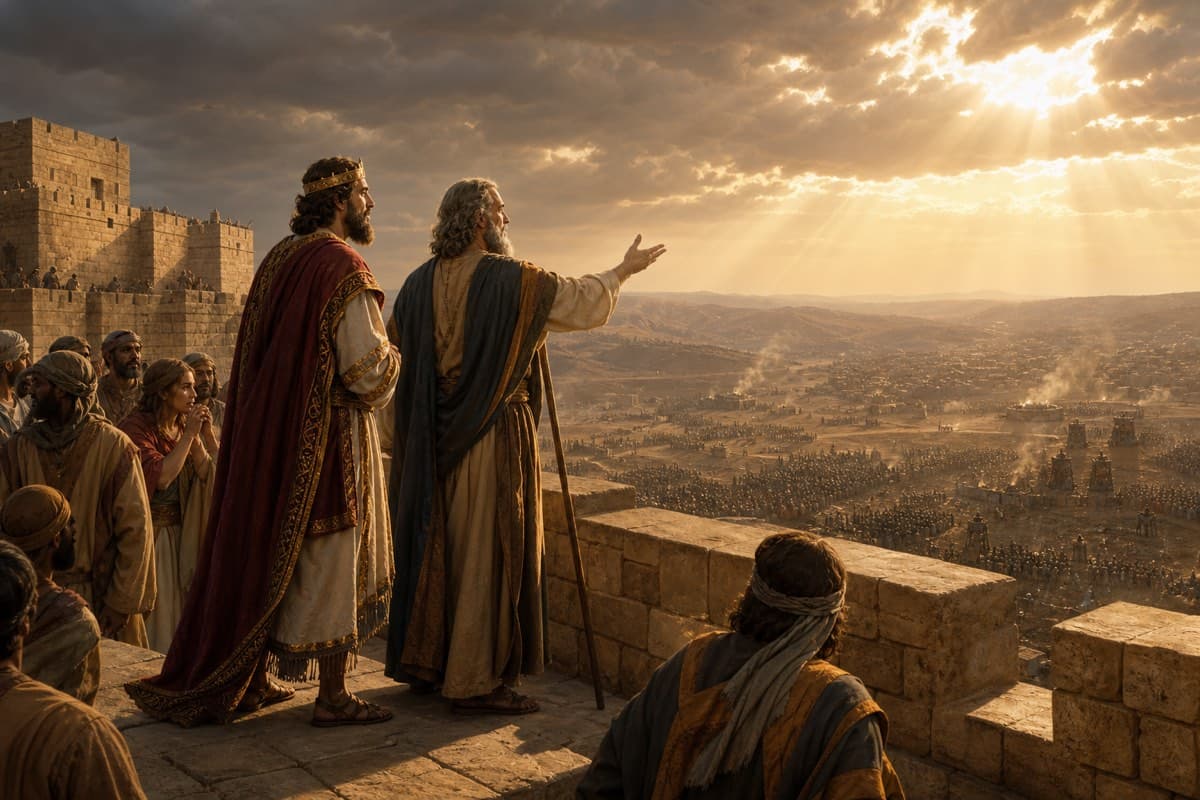
The Assyrian crisis in 2 Kings 18 places Hezekiah's trust under crushing pressure. Assyria had already conquered the northern kingdom of Israel and carried many of its people away. Its armies had taken fortified cities throughout Judah and now stood near Jerusalem. By every visible measure, resistance appeared hopeless. Yet the record introduces Hezekiah by saying that he trusted in the Lord, held fast to Him, and kept His commandments. His confidence during the siege was the fruit of choices made long before the emergency arrived.
Hezekiah's faith was not denial. He strengthened Jerusalem, organized the people, and faced the political danger honestly. Trusting God did not keep him from acting; it kept fear from becoming his master. When the Assyrian spokesman mocked Judah's defenses and even misrepresented Hezekiah's religious reforms, the king's servants obeyed the command to answer nothing. They refused to let a hostile voice dictate the terms of their faith.
Disciples of Jesus Christ also hear arguments designed to make trust seem naive. Doubt may speak through ridicule, frightening predictions, comparison, disappointment, or the claim that no one has ever been delivered from a similar trial. Hezekiah's story teaches that faith need not win every argument before it can remain loyal. Covenant trust remembers the Lord's character, keeps His commandments, uses available wisdom, and leaves room for divine action.
The deepest reason for confidence is Jesus Christ. He has overcome sin and death, and no earthly power can cancel His promises. Deliverance may come as rescue, endurance, guidance, repentance, or peace, but the Savior remains faithful. A life built through daily worship, scripture, prayer, and covenants is better prepared to stand when loud voices insist that trust is useless.
Questions to ponder and discuss
- Hezekiah trusted the Lord while much of his nation was turning away. What choice helps you stay close to the Lord even when people around you choose differently?2 Kings 18:3-7
- What is the difference between trusting the Lord and expecting Him to make every difficult situation disappear?2 Kings 18:5-7
Tuesday, July 14
Spread the Letter Before the Lord
When Hezekiah receives Sennacherib's threatening letter, he takes it to the temple and spreads it before the Lord. The physical gesture reveals the character of his prayer. He does not hide the threat, obsess over it alone, or pretend that the words have no effect. He brings the whole matter into the Lord's presence. Prayer becomes the place where fear is told truthfully and then placed beneath a greater truth about God.
Hezekiah begins by addressing the Lord of hosts, the God of Israel who dwells between the cherubim. He confesses that the Lord alone is God of all the kingdoms and that He made heaven and earth. Only after worship does he describe the insult and ask for rescue. This order reforms spiritual vision. The crisis is real, but it is not ultimate. Sennacherib commands a frightening army; the Lord is Creator. Assyria has burned idols; those idols were the work of human hands.
The king also asks that deliverance help all kingdoms know the Lord. His prayer reaches beyond personal survival. He wants God's name vindicated and His reality made known. In the same way, disciples can ask that the Lord's work in their trials deepen testimony, bless others, and turn attention to Jesus Christ.
Spreading a letter before the Lord can become a pattern for modern prayer. Medical news, strained relationships, financial pressure, grief, accusations, or private fears can be brought specifically to Him. Faithful prayer does not manipulate God or guarantee a preferred schedule. It opens the heart to divine perspective, guidance, comfort, correction, and power. Through Jesus Christ, disciples may approach the Father honestly, knowing that the Savior understands every burden and intercedes with perfect compassion.
Questions to ponder and discuss
- The Assyrians tried to make Jerusalem afraid and doubtful. What messages today sound convincing but quietly weaken faith in the Lord?2 Kings 18:28-37; 2 Kings 19:10-13
- Hezekiah took the threatening letter into the temple and spread it before the Lord. What burden would you like to place more honestly before Heavenly Father in prayer?2 Kings 19:1-7, 14-19
Wednesday, July 15
All Things Are in the Lord's Hands
Sennacherib's boast rests on a simple claim: Assyria has defeated many nations, so Jerusalem must fall as well. The Lord's response through Isaiah reveals the flaw. Assyria has mistaken permitted success for independent sovereignty. The king sees only his own chariots, strategies, and conquests; the Lord sees the whole course of nations and sets limits that human pride cannot cross.
This doctrine does not make cruelty insignificant. The Lord hears blasphemy, knows suffering, and holds rulers accountable. Nor does divine sovereignty mean every event reflects His approval. It means evil is never equal to God, history is not outside His awareness, and no empire can overturn His ultimate work of redemption. The Lord tells Sennacherib that because of his rage and arrogance, He will turn him back. Jerusalem's deliverance becomes a witness that visible power is not the final measure of reality.
Trust in the Lord's hands is especially important when outcomes remain unresolved. Sometimes He removes a threat; sometimes He leads His people through loss; always He can consecrate faithful endurance and fulfill eternal promises through Jesus Christ. The Savior submitted to apparent defeat at Calvary and transformed it into the victory of Resurrection and Atonement. Because of Him, disciples know that sin, death, oppression, and grief do not receive the last word.
This confidence produces humility as well as comfort. Success does not prove self-sufficiency, and hardship does not prove abandonment. Individuals and nations remain accountable to God. Faithful disciples can work for good, resist evil, repent quickly, and face uncertain history without worshipping either human power or human fear. The Lord's hands are capable, just, and marked by the wounds of redeeming love.
Questions to ponder and discuss
- Which truths in the Lord's message to Sennacherib remind you that even powerful people and frightening events remain within God's knowledge and purposes?2 Kings 19:20-34
- When have you seen the Lord provide a way forward that you could not see on your own?2 Kings 19:32-37
- Complete this thought in your own words: I can trust the Lord with my future because ...2 Kings 19:25-28, 34
Thursday, July 16
The Word Works Mightily
Years after Hezekiah, Judah again sinks into idolatry and injustice. King Manasseh's long reign fills Jerusalem with practices that contradict the covenant. Then, during temple repairs under the young King Josiah, Hilkiah the priest finds the book of the law. When it is read, Josiah tears his clothes in grief. He does not treat scripture as an interesting artifact. The word reveals the distance between Judah's life and the Lord's covenant, and the king allows that revelation to pierce him.
Scripture can work mightily because it carries more than information. Through the Holy Ghost, the written word helps disciples encounter God's character, recognize sin, remember promises, and see possibilities for change. Josiah's response combines humility with action. He seeks prophetic confirmation, gathers the people, reads the covenant publicly, and begins reform. True scriptural awakening does not end with strong emotion; it turns hearing into repentance and repentance into faithful practice.
The account also warns that sacred words can be physically near while spiritually neglected. The scroll was found in the temple, but its teachings had not shaped the nation. Modern disciples may own scriptures, hear them quoted, and still allow their power to remain buried beneath distraction or habit. Receiving the word requires attention, meekness, and willingness to be changed.
Jesus Christ stands at the center of scripture. The law exposes sin, but the Savior supplies cleansing and power to become new. As disciples study with real intent, the Spirit can uncover forgotten truth and restore covenant memory. A single passage may correct a course, heal a false belief, strengthen endurance, or awaken desire for holiness. The word works mightily when it is received as the living Lord's invitation rather than merely admired as ancient literature.
Questions to ponder and discuss
- Judah drifted far from the Lord under Manasseh. What usually causes spiritual drifting to happen gradually rather than all at once?2 Kings 21:1-9
- When you sense that your relationship with God could be stronger, what helps you recognize the invitation to return instead of feeling only discouraged?2 Kings 21:10-15; 2 Kings 22:1-2
Friday, July 17
A Whole-Souled Covenant
Josiah gathers Judah's people at the temple and reads the book of the covenant in their hearing. Then he stands by a pillar and covenants to walk after the Lord, keep His commandments, and perform the covenant words with all his heart and soul. The people join him. The scene shows that covenant is more than general admiration for God. It is a whole-souled relationship that orders worship, loyalty, conduct, and community life.
Whole-souled commitment does not mean flawless performance. Josiah's reforms occur in a nation with a painful history, and his own efforts cannot undo every accumulated consequence. Covenant commitment means that the heart is no longer divided about whom it belongs to. Repentance becomes a return to relationship. Commandments become expressions of trust. Ordinances become encounters with Christ's redeeming power rather than ceremonial tasks.
Josiah immediately acts on the covenant by removing objects and practices of false worship. The details are extensive because idolatry had become woven into public and private life. Real renewal therefore required more than a moving assembly. It required dismantling patterns that competed with the Lord. Modern idols may be less visible, but they still promise identity, security, pleasure, or control apart from God. Covenant disciples identify those rivals and choose the Savior again.
Jesus Christ is the mediator of the new and everlasting covenant. His Atonement makes forgiveness, sanctification, and enduring covenant relationship possible. Whole-souled commitment is not self-salvation through intensity. It is offering heart, might, mind, and strength to the One whose grace can transform the offering. As disciples remember baptismal and temple covenants, they receive power to belong to Christ in ordinary choices and difficult seasons.
Questions to ponder and discuss
- Why do you think hearing the book of the law affected Josiah so deeply? What helps scripture move from words you read to truth you feel?2 Kings 22:8-13
- What passage of scripture has recently corrected, comforted, or redirected you? How did you respond?2 Kings 22:10-13
- The temple workers were trusted because they dealt faithfully. What quiet habits make a person trustworthy in family, Church, work, or school responsibilities?2 Kings 22:3-7
Saturday, July 18
Remember the Delivering God
Josiah's reform reaches a joyful climax in the observance of Passover. Second Kings says that no Passover like it had been kept during the days of the judges or the kings. After years of neglected covenant worship, Judah again remembers the night the Lord delivered Israel from bondage and brought His people toward covenant life. The feast joins scripture, ordinance, family memory, and communal worship.
Passover looks backward, but it also forms present identity. Israel is to remember that freedom was received from God, not manufactured by human strength. The meal teaches each generation to locate itself inside the story of redemption. Josiah's people need this memory because idols have told them other stories about power, prosperity, and belonging. Returning to Passover restores the truth that they are a redeemed covenant people.
For Christians, Passover also points to Jesus Christ, the Lamb of God. At the Last Supper, the Savior gave His disciples bread and the cup as emblems of His body and blood. His Atonement delivers from sin and death and creates a covenant people who take His name. The sacrament therefore performs a work similar to sacred remembering in Josiah's day: it brings redemption into present identity and renews the commitment to walk with God.
Remembering in scripture is more than recalling facts. It means allowing God's past faithfulness to shape present trust and obedience. Weekly worship can become routine, but Christ invites disciples to receive it with heart and soul. As Saints remember His sacrifice, repent, and partake worthily, the Holy Ghost renews spiritual life. Sacred memory becomes power for current discipleship and hope for future deliverance.
Questions to ponder and discuss
- Josiah stood by a pillar and covenanted to follow the Lord with all his heart and soul. What does whole-souled covenant keeping look like in ordinary life?2 Kings 23:1-3
- Josiah followed his covenant with specific reforms. Why does a sincere change of heart usually require changing something concrete in our choices or surroundings?2 Kings 23:4-6, 21, 24-25
Sunday, July 19
Hope Beyond Jerusalem's Fall
Second Kings ends with grief. After Josiah's death, Judah's final kings return to evil, Babylon besieges Jerusalem, the temple is burned, the walls are broken, and many people are carried into exile. The book refuses to hide the accumulated consequences of covenant rebellion. Prophetic warnings were not empty. Political maneuvering could not substitute for repentance, and even Josiah's sincere reform did not automatically transform every heart or erase generations of injustice.
Yet the ending is not absolute darkness. The final verses tell how Jehoiachin, a captive king from David's line, is released from prison in Babylon, given a place of honor, and sustained for the rest of his life. It is a small event compared with Jerusalem's ruin, but it functions like a lamp in the final paragraph. The house of David has not vanished. The Lord's promises are still moving through history, even in exile.
This pattern prepares readers for Jesus Christ, the promised Son of David. Israel's kings could not permanently save the people, and their failures intensified the need for a perfectly righteous King. Christ enters the fallen human story, bears sin, rises from death, and gathers the scattered. In Him, judgment is not ignored and mercy is not exhausted. He can create return after exile, holiness after failure, and resurrection after loss.
Disciples sometimes live in chapters where consequences cannot be quickly reversed. A relationship, opportunity, health condition, or season may truly be lost. Scripture does not require pretending that ruins are whole. It teaches believers to mourn faithfully while watching for covenant light. The Savior remains able to redeem, guide, and preserve a future beyond what can presently be seen. The last page of 2 Kings is not the last page of God's work.
Questions to ponder and discuss
- Jerusalem eventually fell after generations of rejecting prophetic warnings. What can this difficult account teach us about taking the Lord's invitations seriously while there is still time to change?2 Kings 24:18-20; 2 Kings 25:1-12
- The stories of Hezekiah, Josiah, and Jerusalem include both deliverance and loss. How do these chapters deepen your confidence that the Lord remains faithful while still honoring human agency?2 Kings 19:32-37; 2 Kings 23:1-3; 2 Kings 25:8-12
- Looking back over this week's lesson, what is one way you feel invited to trust the Lord, return to His word, or stand more firmly in your covenants?2 Kings 18:5-7; 2 Kings 22:8-13; 2 Kings 23:1-3
These are supplemental study notes written by Rooted, an independent app not affiliated with The Church of Jesus Christ of Latter-day Saints. For the official lesson, see Come, Follow Me on churchofjesuschrist.org.