
God Is My Salvation
Isaiah 1–12 · September 14–20, 2026
Isaiah witnesses of cleansing, covenant hope, and the coming of Jesus Christ.
Monday, September 14
Scarlet Made White
Isaiah begins with a wounded relationship. The Lord has nourished children who no longer recognize Him, and their rebellion has injured the whole community. The images are deliberately physical: an untreated body, a ravaged country, a lonely shelter left in a field. Sin is more than a private failure of feeling. It damages the bonds that should make covenant life safe, faithful, and just. Yet the Lord continues to address these people as His own. His rebuke is spoken within a relationship He intends to redeem.
The chapter also exposes the danger of separating worship from conduct. Jerusalem still has sacrifices, assemblies, and prayers. Religious activity has survived while concern for vulnerable neighbors has withered. The Lord rejects the attempt to bring bloodstained hands into worship without surrendering the violence and dishonesty those hands represent. He directs His people toward practical repentance: abandon evil, learn righteousness, defend those whose claims are ignored. The movement from cleansing to justice belongs to a single invitation.
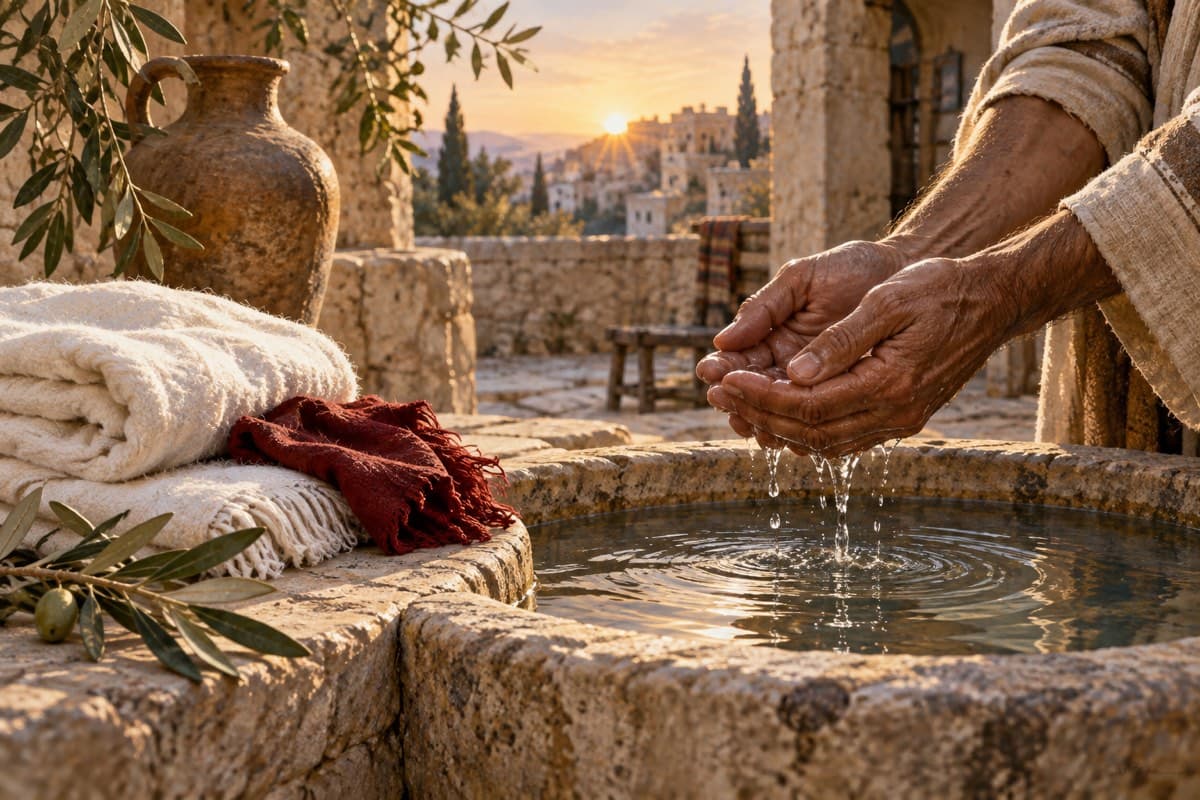
Against that severe background, the promise of white snow and wool becomes astonishing. God does not pretend the scarlet stain is pale. He declares that even conspicuous guilt can be overcome. Latter-day Saints read this promise in light of the Atonement of Jesus Christ. Forgiveness is possible because the Savior can do what regret alone cannot accomplish. Repentance means turning toward His mercy with enough trust to change, confess wrongdoing, and repair harm where repair is possible.
Isaiah ends this movement by describing a restored city with trustworthy judges. Redemption reaches beyond an individual's relieved conscience to the character of a people. Someone who receives mercy learns to extend protection, honesty, and fairness to others. The chapter therefore holds hope and responsibility together. The Lord's holiness exposes real wrong; His grace makes a different future possible. Neither a busy religious schedule nor despair over yesterday's failures must determine tomorrow. Through Christ, a stained life can become a faithful life, and a damaged community can begin to practice righteousness again.
Questions to ponder and discuss
- When Isaiah feels hard to understand, what helps you keep looking for Jesus Christ instead of giving up on the chapter?3 Nephi 23:1-3
- Isaiah connects repentance with helping people who are vulnerable. How could caring for someone become part of turning your heart toward Christ this week?Isaiah 1:16-18
Tuesday, September 15
Learning Peace in the Lord’s House
Isaiah 2 opens a window beyond the corruption described in the first chapter. The Lord's house stands at the center of a world being taught. People from many nations move toward it, inviting one another to receive instruction and walk in God's ways. The scene is larger than an impressive building. Its central action is a change in allegiance: people who once trusted their own power willingly become learners before the Lord.
The consequences of that learning are public and practical. Weapons become agricultural tools, and nations stop training for war. Isaiah joins worship, instruction, justice, and peace in a single vision. A people cannot claim to have learned the Lord's ways while treating hostility as its highest achievement. For Latter-day Saints, temple worship participates in the Lord's gathering work by centering life on Jesus Christ and binding disciples to Him through covenants. Those covenants reach into the conduct of ordinary days.
The remainder of Isaiah 2 reveals why this transformation is necessary. Wealth, military resources, idols, and human prestige have become objects of confidence. The prophet pictures proud things brought low until the Lord alone is exalted. The contrast helps explain the mountain at the chapter's beginning. God's house is exalted because He is worthy of trust; human pride falls because it claims a security it cannot finally provide.
Isaiah 4 adds the image of shelter. After cleansing, Zion is covered with cloud and light, recalling the Lord's presence with Israel in the wilderness. A refuge from heat and storm suggests divine care amid exposure and danger. It does not guarantee that faithful people never suffer. It teaches where covenant security is found and whose presence makes a people holy.
Together these chapters invite a life shaped by what God teaches in His house. Worship becomes preparation for patient reconciliation, honest judgment, and faithful service. The future peace Isaiah sees gives present disciples a direction to practice. Every decision to relinquish pride, keep a covenant, or refuse needless contention can express trust in the Lord whose instruction will ultimately change the nations.
Questions to ponder and discuss
- What does the Lord’s promise to make scarlet sins white as snow teach you about the fresh start Jesus Christ offers?Isaiah 1:18-19
- What helps you recognize a loving invitation to repent when a prophetic warning feels uncomfortable?Isaiah 1:16-19; Isaiah 5:20-21
- What is one small way you could make room for the Lord’s perspective before deciding that your first reaction is right?Isaiah 5:20-21
Wednesday, September 16
The Fruit the Lord Seeks
The song in Isaiah 5 begins with care. A vineyard has been planted on a fruitful hill, cleared of stones, supplied with choice vines, and equipped for protection and harvest. Everything in the description prepares an expectation of good fruit. When the vineyard produces wild grapes, the disappointment reveals the central issue: a people who have received the Lord's care have failed to become what covenant life was intended to produce.
Isaiah explains his own image. The vineyard represents the house of Israel, and the planting includes the people of Judah. The desired harvest is justice and righteousness. Instead, the Lord hears the cry of people being harmed. The interpretation keeps the song from becoming a general complaint about imperfect performance. The failure is specific and relational. Neighbors suffer while those with power continue to enjoy the benefits of a cultivated society.
The warnings that follow describe several ways this happens. Property accumulates in fewer hands. Entertainment consumes attention until the Lord's work is forgotten. Moral language is reversed so that evil appears good. People admire their own cleverness and excuse the guilty for payment. Isaiah 3 likewise confronts leaders who consume the vineyard and fill their houses with what belongs to the poor. Prophetic warning brings hidden costs into view.
These chapters require a careful reading of accountability. The Lord's people are responsible for the fruit of their choices, but the image does not imply that they save themselves without His grace. The vineyard exists because of the owner's prior labor. Likewise, discipleship begins in divine generosity and depends on Jesus Christ. The response to that generosity is a life in which mercy and honesty can grow.
Isaiah's message becomes hopeful when correction is received as an invitation to return to the purpose of the planting. Success is not measured only by what a person possesses, displays, or can persuade others to approve. The Lord seeks people whose dealings are fair, whose pleasures do not erase compassion, and whose words remain truthful. Such fruit makes His care visible in the lives of those around them.
Questions to ponder and discuss
- Isaiah describes people coming to the Lord’s house to learn His ways. What would you most like the Lord to teach you as you prepare for or worship in the temple?Isaiah 2:2-3
- What would it look like to carry a little of the temple’s peace into a tense conversation at home?Isaiah 2:3-4
Thursday, September 17
Cleansed and Called
Isaiah 6 places an earthly death beside a vision of enduring divine kingship. In the year King Uzziah died, Isaiah saw the Lord enthroned in glory. A human reign had ended, but heaven's authority remained. The setting turns attention away from the instability of political succession toward the holiness of the One whose purposes do not depend on a mortal ruler's survival.
Isaiah's first response is an honest recognition of unworthiness. He names his own unclean lips and his place among a people with the same condition. He does not present himself as the single righteous observer of everyone else's failures. Encountering divine holiness exposes his need for cleansing as well as theirs. That confession is especially significant for a prophet whose calling will involve speaking the Lord's word.
The answer comes through an action Isaiah does not perform for himself. A seraph brings a coal from the altar, touches his lips, and declares his iniquity removed. The scene communicates cleansing and preparation for service. Latter-day Saints understand forgiveness through Jesus Christ; the visionary symbol does not make physical injury a means of repentance. The important movement is from acknowledged need to grace received, then from grace to willing service.
Only after that cleansing does Isaiah answer the call to go. His readiness rests on the Lord's action rather than confidence that he has never failed. The chapter offers a pattern for disciples who feel inadequate: humility can lead to dependence on God and a faithful response. It need not end in withdrawal from every opportunity to serve.
The commission also contains a difficult reality. Isaiah will speak to people who resist understanding, and his ministry will unfold through judgment and desolation. Willingness does not guarantee an easy assignment or a receptive audience. Still, the chapter ends with an image of surviving life in a tree. The Lord can preserve a holy seed when outward circumstances look devastated. Faithful service is possible because His purposes reach beyond what His servants can immediately see.
Questions to ponder and discuss
- What does Isaiah’s experience teach you about receiving the Lord’s help when you feel inadequate to serve?Isaiah 6:1-8
- How might remembering that prophets are called by God change the way we listen to their counsel?Isaiah 6:8-9
- Where could a willing heart make a difference this week, even if you do not feel especially qualified?Isaiah 6:8
Friday, September 18
Immanuel in a Frightened World
Isaiah's prophecies of the Messiah enter a world of political fear. In chapter 7, Ahaz and his people tremble because Syria and the northern kingdom of Israel threaten Judah. The Lord sends Isaiah with a message that their plan will not stand and with a call to remain firm in faith. The question beneath the crisis is the location of trust. Visible danger can make a powerful earthly protector seem more dependable than the word of God.
Within that setting comes the sign of Immanuel. Matthew 1 explicitly connects Isaiah 7:14 with the birth of Jesus and explains the name as God with us. Christian faith therefore receives the verse as a witness of the Savior while still allowing the prophecy to speak within Isaiah's immediate historical setting. Understanding every possible detail of its earlier application is not required to recognize Matthew's clear testimony of Christ.
Isaiah 8 continues the contrast between fear and holiness. The Lord is to be treated as the true object of reverence. He can be a sanctuary, yet people who refuse Him encounter a stumbling stone. The same divine reality may be received with faith or resisted. Isaiah does not promise that trust removes every threat; he teaches that threat need not become the highest authority over the soul.
Chapter 9 turns from darkness toward light and from oppressive rule toward the gift of a child. The promised ruler is associated with wisdom, divine might, enduring fatherly care, and peace. His government rests on judgment and justice. In Jesus Christ, these promises reveal a Savior whose power and compassion belong together. He does not merely distract people from darkness. He comes with authority to overcome sin and death and to establish righteous peace.
These chapters teach a faith that can acknowledge danger without surrendering its center. The promise of God's presence reaches deeper than reassurance that events will follow a preferred timetable. Immanuel means that salvation is personal and divine. The Lord has entered human history, and His redeeming purposes continue even when the world's most visible powers appear overwhelming.
Questions to ponder and discuss
- Immanuel means God with us. When has remembering that Jesus Christ is near helped you face an uncertain situation?Isaiah 7:14; Matthew 1:21-23
- What helps you turn toward the Lord when other people’s fear starts becoming your own?Isaiah 7:7-9; Isaiah 8:12-13
Saturday, September 19
A Branch, a Banner, and a Gathered People
At the end of Isaiah 10, towering growth is cut down. Isaiah 11 then begins with a shoot coming from the stem of Jesse. The change in scale is striking: immense power falls, while new life appears from what looks reduced and unimpressive. Hope does not depend on the survival of every structure people once trusted. The Lord can bring His promised future through a beginning that outward appearances would underestimate.
Jesse connects the image with David's family, and the chapter describes a ruler upon whom the Spirit of the Lord rests. Wisdom, understanding, counsel, might, knowledge, and reverence characterize His reign. He does not judge merely by appearances or hearsay. The poor and meek receive righteous judgment. This is the kind of government the earlier chapters showed Judah desperately needing. In the restored gospel, Doctrine and Covenants 113 identifies the Stem of Jesse as Christ and connects related imagery with servants and the gathering of Israel.
The consequences of the Messiah's rule extend into a vision of peace throughout creation. Animals associated with danger dwell together, and children are safe. Isaiah gives the reason: the earth is filled with knowledge of the Lord. Peace is therefore rooted in divine truth and righteousness, not simply in a temporary balance of competing fears. Latter-day Saints look forward to the Savior's millennial reign while learning His ways now.
The chapter also pictures a scattered people coming home. An ensign gathers those who have been dispersed, old rivalries are overcome, and a highway makes return possible. The language recalls an exodus, a passage out of bondage made possible by the Lord. Gathering is both a promise of belonging and an expression of His covenant faithfulness.
For disciples today, these images connect hope with participation. Missionary work, covenant worship, and service that helps others come to Christ belong to His gathering purposes. The complete fulfillment remains His work, accomplished in His time. The tender shoot teaches patience; the righteous Judge teaches integrity; the banner teaches shared allegiance. People who feel scattered can trust that the Lord remembers His promises and knows how to bring His children toward Him.
Questions to ponder and discuss
- Which title of Jesus Christ in Isaiah 9:6 feels especially meaningful to you today, and why?Isaiah 9:2, 6-7
- Isaiah pictures a world where creatures no longer hurt one another. How does that promise shape the kind of peace you want to practice now?Isaiah 11:6-9
Sunday, September 20
Drawing Joy from the Wells of Salvation
Isaiah 12 is short enough to read slowly in a single sitting, yet it gathers much of the hope developed across the preceding chapters. Anger gives way to comfort, fear gives way to trust, and a redeemed people begins to sing. The chapter does not erase the warnings that came before it. Its joy has depth precisely because guilt, judgment, threat, and scattering have been taken seriously. Salvation is a work of God strong enough to answer those realities.
The speaker names God as salvation, strength, and song. Each word adds something. Salvation locates deliverance in the Lord rather than in self-sufficiency. Strength describes continuing dependence, including the capacity to live faithfully after rescue. Song expresses a response that includes gratitude and praise, not merely relief. The redeemed life becomes a life that acknowledges its giver.
The wells of salvation make this dependence tangible. Water sustains life, and drawing it suggests receiving what is available from a source beyond oneself. Isaiah gives the action joy. Approaching the Lord need not be imagined only as an anxious inspection of personal failure. Through Jesus Christ, repentance and covenant renewal can become encounters with mercy that restore hope and the desire to keep walking with Him.
The chapter then turns outward. The people are to declare the Lord's deeds and make His name known. Personal gratitude becomes shared witness. This connects the singer's confidence with the larger gathering vision of Isaiah 11: those who have experienced the Lord's goodness can invite others to recognize Him. The final assurance is His presence among His people, the Holy One of Israel in their midst.
Reading Isaiah 1–12 as a whole reveals a movement from wounded covenant life toward a renewed people. Cleansing, instruction, righteous judgment, prophetic service, the Messiah, and gathering all contribute to that movement. The closing song rests on the character of the Savior who accomplishes redemption. Trust does not require pretending that mortality is easy. It means receiving His grace, continuing in His ways, and learning to praise Him with confidence that His promises will be fulfilled.
Questions to ponder and discuss
- Isaiah promises that the Lord will gather His scattered people. What helps someone feel they have a place among God’s covenant family?Isaiah 11:11-12
- What is one way the Savior has been a source of strength or comfort for you this week?Isaiah 12:1-3
- If you shared one hopeful thing about Jesus Christ from this week’s reading, what would you want someone to hear?Isaiah 12:4-6
These are supplemental study notes written by Rooted, an independent app not affiliated with The Church of Jesus Christ of Latter-day Saints. For the official lesson, see Come, Follow Me on churchofjesuschrist.org.