
A Marvellous Work and a Wonder
Isaiah 13–14; 22; 24–30; 35 · September 21–27, 2026
Jesus Christ brings rest, reveals truth, and restores His people.
Monday, September 21
Leaving Babylon, Finding Rest
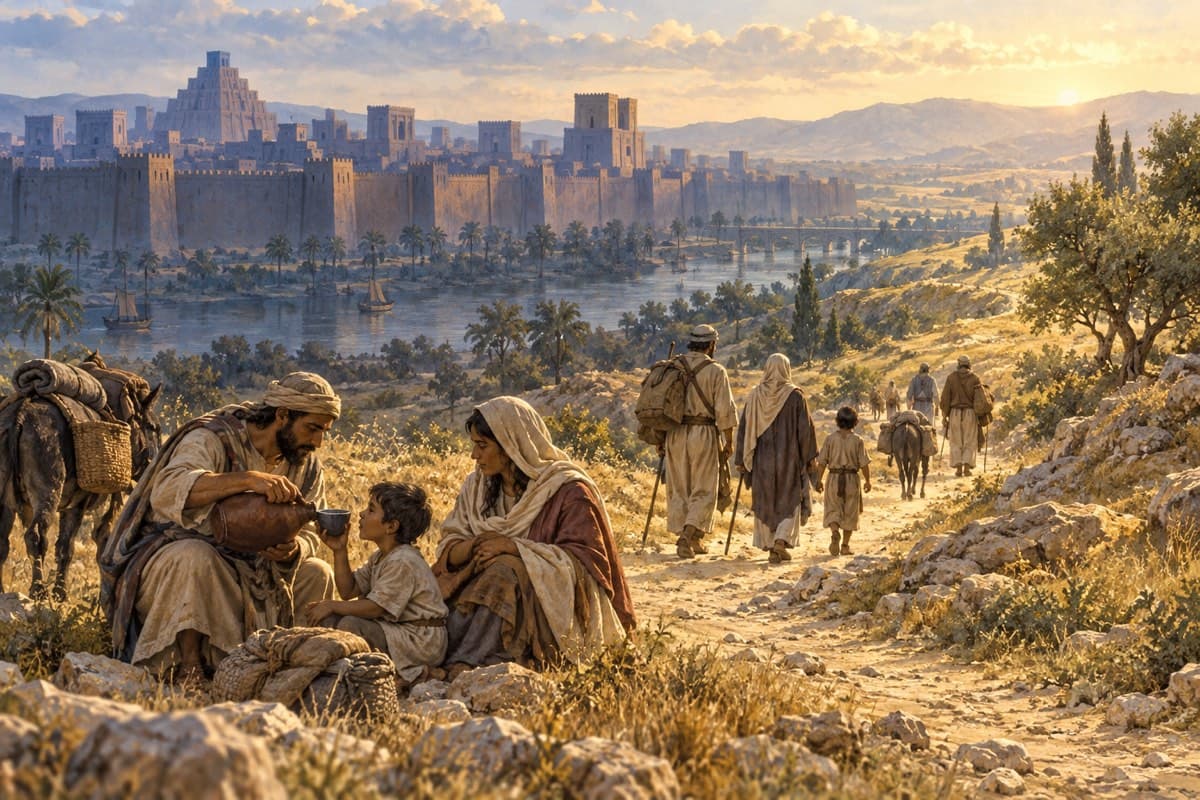
Isaiah's warnings against Babylon uncover the weakness beneath impressive human power. A city can command armies, gather treasure, and intimidate its neighbors while building its life on foundations that cannot endure. Isaiah 13 names arrogance and evil as reasons for judgment. The prophecy does not ask the reader to admire destruction. It exposes a world in which the strong make others afraid and assumes that God will not allow that arrangement to last forever.
Chapter 14 begins with mercy toward Jacob and a promise of relief from sorrow, fear, and bondage. This placement matters. The fall of the oppressor belongs within a larger account of God's care for the oppressed. Isaiah then presents a taunt against Babylon's king. The ruler who seemed untouchable becomes as powerless as the dead rulers who preceded him. Even the trees rejoice because the destroyer no longer comes against them. The entire portrait reverses the claims of imperial greatness.
Latter-day Saints also recognize in the language about Lucifer a description of Satan's pride and rebellion. The king's boast of climbing higher and placing his throne above others reflects the same desire to claim God's glory. Moses 4:1–4 clarifies that spiritual pattern: Satan sought honor and the destruction of human agency, while the Beloved Son honored the Father's will. Isaiah's historical address and its wider spiritual application can be read together without pretending that every detail refers to only one person.
Leaving spiritual Babylon therefore means more than rejecting conspicuous luxury. It means abandoning the wish to secure one's worth through superiority, intimidation, or control. Humility before Jesus Christ makes room for another person's dignity and for correction of one's own behavior. His rest is not indifference to injustice. It is freedom from serving the very ambitions that produce it. Repentance begins to loosen that bondage now, while the promised final defeat of evil assures the faithful that cruelty will never possess the last word.
Questions to ponder and discuss
- Where does the pressure to look impressive make it harder to rely on Heavenly Father, and what helps you let that pressure go?Isaiah 13:11; Isaiah 14:12-15
- What might receiving rest from Jesus Christ look like when the thing that worries you has not been resolved yet?Isaiah 14:1-3
Tuesday, September 22
The Key and the Faithful Steward
Isaiah 22 brings the warning close to home. Jerusalem's people can see the breaches in their walls, count their houses, and gather water. Yet their careful preparations leave out the One on whom their life depends. Isaiah does not condemn responsible planning. He exposes the contradiction of acting as though practical competence makes repentance unnecessary. A protected reservoir cannot repair a heart that refuses its Maker.
The chapter then names two royal officials, Shebna and Eliakim. Shebna's attention to an impressive burial place becomes a picture of misplaced concern for personal honor. Eliakim is called into an office represented by a robe, a sash, and the key of the house of David. He is to exercise responsibility for others and be a father to Jerusalem's inhabitants. Authority is presented as a stewardship that God can entrust and remove, not a private possession to display.
The image of opening and shutting reaches beyond this immediate setting. Revelation 3:7 applies the key of David to Jesus Christ. Read together, these passages teach Christians to recognize the Savior's rightful authority and His power to open what no rival can close. The connection does not require treating every sentence about an ancient official as a literal biography of Christ. It allows an actual office and its symbols to point toward the perfectly faithful Lord.
For Latter-day Saints, the imagery resonates with the restored priesthood and its keys. Authorized servants act under Jesus Christ; they do not replace Him as the source of salvation. Ordinances and covenants direct people into a relationship with the Savior whose power makes their promises effective. The best exercise of entrusted authority is therefore protective and generous. It makes room for others to come to Christ, carries responsibility without self-promotion, and remembers that the household belongs to the Lord. A disciple can prepare diligently, serve decisively, and still depend entirely on Him.
Questions to ponder and discuss
- Isaiah describes the Lord as shelter, shade, and a generous host. Which picture best matches the help you need from Him right now?Isaiah 25:4-6
- How does the promise of resurrection shape the way you offer comfort to someone who is grieving?Isaiah 25:8-9; Isaiah 26:19
- What is one truth about Jesus Christ that you want to rely on more steadily this week?Isaiah 28:16
Wednesday, September 23
A Refuge Stronger Than Death
Isaiah 24 pictures a world emptied of its familiar celebrations. Rank and wealth cannot shield anyone from the consequences of a broken relationship with God. The language expands beyond one city's misfortune to a shaken earth and the Lord's reign in Zion. Chapter 25 then answers devastation with praise. The Lord who confronts evil is also a shelter for the needy, a shade against heat, and the host of a feast for all peoples.
These everyday images prepare the reader for an extraordinary promise: God will swallow up death and wipe away tears. A shelter protects a person from a passing storm; the Savior's victory reaches the enemy that no mortal shelter can finally exclude. The movement from hunger and exposure to death and mourning teaches the breadth of His salvation. He is attentive both to immediate distress and to humanity's deepest need.
Isaiah 26 adds the language of resurrection and trust. The dead will live, and those who dwell in the dust are invited to awake and sing. Paul later uses Isaiah's language about death being swallowed up in his explanation of the Resurrection in 1 Corinthians 15. Latter-day Saints affirm that Jesus Christ's bodily Resurrection makes resurrection possible for every person. His victory is more than the survival of a memory or a consoling metaphor about spring.
This hope leaves room for honest grief. Isaiah promises that God will wipe away tears; he does not imply that faithful people never shed them. Waiting for the Lord can include mourning, uncertainty, and continued acts of love when answers are incomplete. His promised peace is a relationship of trust within those conditions, not a requirement to appear emotionally untouched by loss.
The feast also widens belonging. Salvation is not a prize reserved for the socially secure. The needy whom God shelters stand within the same vision as the nations He invites. Disciples bear witness of that future when they feed, comfort, include, and remember. Their service does not abolish death, but it makes the Savior's care tangible while His people wait for the day when His victory is fully revealed.
Questions to ponder and discuss
- What helps a familiar act of worship, such as prayer or taking the sacrament, become an honest connection with God?Isaiah 29:13
- Why can loving correction be hard to hear, and what helps you stay open when the Lord asks you to change?Isaiah 30:8-14
Thursday, September 24
Building on the Tried Stone
Isaiah 28 places two kinds of security beside each other. One is a fading crown of pride, sustained by pleasure, misplaced confidence, and impaired judgment. The other is a stone God lays in Zion: tested, precious, and dependable. The contrast is especially serious because the chapter addresses people entrusted with leadership and teaching. When those who should help others see clearly lose their own discernment, the consequences spread.
The warning is not confined to literal drunkenness, though the chapter speaks plainly about it. The rulers also boast as if disaster cannot reach them. Isaiah exposes their agreement with falsehood as something too weak to shelter them when judgment comes. A comforting story about one's own invulnerability cannot become a foundation merely because it has been repeated often.
The Lord answers with a foundation of His own providing. In Christian reading, this points to Jesus Christ, as the New Testament's use of Isaiah's stone imagery makes explicit. Faith rests on His character and redeeming work. It does not mean that a disciple never feels fear; it means that fear need not decide what is ultimately trustworthy. A life built on Christ can receive correction because its worth does not depend on being right at every moment.
The chapter also teaches through agriculture. A farmer does not plow endlessly or treat every seed and grain in exactly the same way. Preparation, sowing, and threshing have distinct purposes. The passage ends by praising the Lord's counsel and excellent working. His wisdom exceeds both human arrogance and the assumption that all growth must follow one visible schedule.
For disciples, a sure foundation and patient growth belong together. Daily obedience is neither frantic self-construction nor passive waiting. The Savior supplies the ground on which meaningful effort can stand. Scripture study, covenant worship, honest repentance, and service align the structure of a life with Him. Over time, these ordinary practices make room for clearer judgment and steadier love, even while the Builder continues to reveal places that need repair.
Questions to ponder and discuss
- Which blessing of the restored gospel feels especially marvelous to you at this point in your life?Isaiah 29:13-14
- When has a passage in the Book of Mormon helped you see Jesus Christ or your own circumstances more clearly?Isaiah 29:18-19, 24
- How could our group help someone experience the blessings of the Restoration in a way that feels personal and welcoming?Isaiah 29:14; Doctrine and Covenants 4:1-3
Friday, September 25
A Marvellous Work and a Wonder
Isaiah 29 begins with distress in the city where David dwelt and ends with understanding, holiness, and joy. Between those points stand images of a voice from the dust, a sealed book, people whose lips honor God while their hearts are distant, and a Creator whose work does not depend on human approval. The chapter is therefore about more than gaining information. It concerns the restoration of a people able to hear and respond to the Lord.
Latter-day Saints read these verses alongside 2 Nephi 27 and Joseph Smith—History. Nephi expands the prophecy of the book and identifies the Lord as the One capable of bringing His own work to pass. Joseph Smith's history records both the First Vision and Martin Harris's encounter with learned men concerning characters copied from the plates. These scriptural accounts connect Isaiah's imagery with the coming forth of the Book of Mormon and the Restoration of the gospel of Jesus Christ.
The contrast between learned and unlearned should not become contempt for education. The issue is whether human ability claims the right to limit what God may reveal. Scholarship can illuminate language and history; it cannot replace revelation or make divine truth dependent on prestige. Joseph's calling witnesses that the Lord can work through someone who lacks the world's expected credentials. It does not suggest that disciples should avoid careful learning.
The marvelous work also answers the distance between lips and heart. Restored scripture and priesthood authority invite renewed covenant life, but possession of sacred things does not automatically create conversion. A reader can hold the Book of Mormon while resisting its witness of Christ. Receiving the Restoration includes letting that witness reorder priorities, soften resentment, and lead to repentance.
Isaiah's closing emphasis is wonderfully humane: the meek rejoice, the poor find joy in the Holy One, and those who erred come to understanding. God's work is marvelous because He restores a relationship people could not recover through pride alone. Its living fruit is a people learning to hear Him and to honor His children.
Questions to ponder and discuss
- What helps you make room for quiet trust in the Lord when your first instinct is to rush or take control?Isaiah 30:15, 18-19
- Think of a time the Lord helped you recognize a good next step. What made that guidance easier to notice?Isaiah 30:20-22
Saturday, September 26
Returning to the Voice That Guides
Isaiah 30 describes people making plans for protection while refusing the counsel that could save them. They turn toward Egypt and ask prophets for reassuring words. Their difficulty is not a shortage of activity. It is a determination to choose a course first and then demand a message that approves it. The Lord exposes this false refuge through the images of a bulging wall and a vessel shattered beyond ordinary use.
Then the tone changes with a declaration of the Lord's patience. He waits to be gracious. The people have resisted returning and resting in Him, yet He still promises to hear their cry. The chapter holds accountability and mercy together. Grace does not mean that destructive choices are harmless; judgment does not mean that the person who made them has exhausted God's willingness to receive a return.
The renewed relationship includes teaching. Even amid adversity, the people will no longer be without guidance. A word directs them onto the way when they turn aside. Their response includes casting away idols, a concrete change in what they trust. The restored rains, bread, pastures, and water then portray life being nourished again. These images belong to a prophetic promise for God's people, not a formula guaranteeing wealth to every obedient individual.
Disciples of Jesus Christ can recognize the same movement in repentance. A person stops requiring God to endorse a chosen escape and becomes willing to hear Him. Returning may involve confession, restitution, abandoning a harmful habit, or accepting help that pride previously refused. Quiet confidence is not doing nothing. It is acting from trust rather than from the panic that insists safety must be seized immediately.
The Lord's patience also shapes the way disciples accompany others. A returning person needs truth spoken with hope, not flattery that hides danger or contempt that makes change seem impossible. The Savior can guide an unfinished life. His invitation remains a way to walk, one faithful step after another, under the care of the One who hears and heals.
Questions to ponder and discuss
- What does Isaiah’s picture of a desert beginning to bloom help you imagine about the Savior’s power to renew a life?Isaiah 35:1-2, 6-7
- When someone feels worn down or afraid, what kinds of support help them feel strengthened without feeling pressured to be okay?Isaiah 35:3-4
- What helps you keep turning toward Christ while you wait for healing or answers?Isaiah 35:5-10
Sunday, September 27
The Wilderness Shall Rejoice
Isaiah 35 transforms the landscape of fear. Wilderness becomes a place of flowering, dry ground receives water, and a highway leads the redeemed toward Zion. This is not decorative optimism laid over the warnings that came before. It is a vision of what the Lord can restore after human pride, estrangement, and suffering have shown their limits. The final destination is joy in His presence.
The chapter begins with the land rejoicing, then addresses weak hands, feeble knees, and fearful hearts. Before describing opened eyes and renewed movement, it calls people to strengthen one another. The promised future creates a present responsibility. Those who trust that God will come to save can speak courage and provide practical support now. Hope is something a community learns to carry together.
Christians recognize the Savior's healing ministry in the promises that the blind will see, the deaf hear, and the lame leap. Jesus' answer to John's messengers in Matthew 11:2–6 points to such works as evidence of His mission. Latter-day Saints also look toward the complete healing made possible through His Atonement and Resurrection. Present miracles witness of that power, while their timing and form remain in God's hands. A person with an enduring disability or illness is not less faithful, less whole in spiritual worth, or outside the company of the redeemed.
The highway is called the way of holiness. Grace restores more than comfort; it makes a new manner of life possible. Those walking toward Zion learn to relinquish evil and receive the Savior's cleansing. The road is not reserved for the impressive. It is provided for those whom the Lord redeems.
Isaiah 27 adds the promise that Israel will be gathered one by one. Together these images join a worldwide work with personal care. The Lord does not lose sight of individuals within the multitude. His marvelous work includes the weary person being helped along the path, the learner discovering His voice, and the grieving disciple holding to a promise of reunion. Sorrow will not define the journey forever.
Questions to ponder and discuss
- Which image of Jesus Christ from this week would you most want to carry into a hard day, and why?Isaiah 25:4, 8; Isaiah 28:16
- What is one small way you want to draw closer to the Lord this coming week, and how could this group support you?Isaiah 29:13; Isaiah 30:21
These are supplemental study notes written by Rooted, an independent app not affiliated with The Church of Jesus Christ of Latter-day Saints. For the official lesson, see Come, Follow Me on churchofjesuschrist.org.